I made a few trips in 2008. Personal and work related, some were spontaneous while some others were well planned. Each trip was a unique experience. However the one trip to Cairo was, in my retrospective analysis, was the most interesting one.
As I boarded my 12 hour non-stop flight from JFK to Cairo, I tried to picture what would await me in the land of the Pharaohs. When it finally hit me that I’m going to Egypt, I began imagining the Pyramids and mummies, richly decorated, demanding admiration and respect. Keeping in mind the fact that the mighty Sahara desert lays claim to much of Egypt’s land, I also imagined a hot arid country with sand lining the side of the streets (surprisingly, much like many cities in South India), people with a chronic frown on their faces and a squint in their eyes as they tried to avoid the blazing sun. “Wow, Africa dude,” Manu had reminded me the week before I left. Yes, I said to myself, it’s Africa. Land of the Africans, elephants, lions and the safari, genocide, the Flower brothers (Andy and Grant), Nelson Mandela, and hyperinflation. And then my father told me that Egypt would resemble a middle-eastern country more so than it would, an African one. Think Doha or Muscat, my father said. So I did.
And so when I landed at Cairo International Airport and stepped off the aircraft and on to the tarmac, I was shocked (and mildly pleased) to be greeted with a pleasant 20 degrees and a country that resembled more than anything else I had imagined, home.
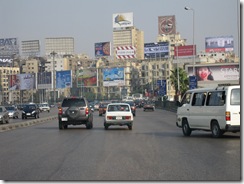
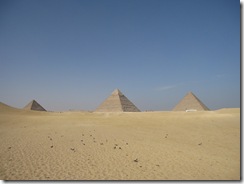
I spent a week in Egypt. Aside from making trips to the Intercontinental hotel for my conference, I spent some quality time going around the bustling and crowded city. I made the obligatory trip to the Pyramids in Giza, indulged in huge quantities of rich hummus and spent more time in a thirty year old rattling Peugeot taxi than in my hotel room. Locally known as Al Qahirah, the city is Africa’s largest, with a population of over 17 million. Looking at an areal shot of the city, amidst the denseness of brick and mortar, one can clearly see the Nile river drawing the line of life, destiny and everything in between. Cairo struck me as a city that mirrors Bombay [sic] in many ways. It’s crowded, indisciplined, and most of all, people simply don’t have time to stop and smile. They just step on your foot and continue on their way.
The Egyptians, I concluded at the end of the week, seem to be a people caught between Westernization, taking forced pride in a rich and illustrious culture that has left behind much of what sustains their economy today, and who they really are.
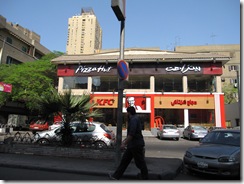
Decisions made by former presidents Gamal Abdul Nasser, Anwar Sadat, and the current president Hosni Mubarak have resulted in Pizza Hut, KFC, Nike and Hyundai. Etisalat proudly boasts of its 3.75G service offering. The Cairo Stadium still echoes the sound of fans cheering as the national football team lifted their consecutive African Cup of Nations. Branding is everywhere.
And yet, the Egyptians appear immensely proud of their illustrious history. However, I am convinced that while the Egyptian is grateful for the rich culture left behind, much of this comes from a survivalistic necessity to be so. The Egyptian today has little else to use to hold your interest other than the Pyramids, the Sphinx, the Valley of the Kings and Memphis. That’s right, there is no oil. While present day Egypt aches to be culturally closer to it’s middle-eastern allies in terms of Islamic practices, Egypt is also faced with a strong need to hold on to the thousand year old pagan history, little of which influences the life of a present day Egyptian. The pride that the Egyptian seems to take in this culture and its impact on his day to day life seem at odds, so much so that one feels like singling out the materialistic profit that the Egyptian stands to make through this as the only reason why he even bothers associating himself with this culture.
My thoughts are by no means intended to cast a negative light on the city or the country. I loved Cairo. I would definitely want to go there again.


